

Objective
This guide explains the main factors that affect the cost and completion time of a fibre optic installation project and helps you understand what to expect before work begins.
Key Takeaways
- Every fibre project is unique and requires a careful plan.
- Surveys and route design play a major role in budgeting.
- Civil engineering work is often the largest cost factor.
- Permits and approvals can affect project schedules.
- Good project management helps reduce delays and unexpected costs.
- Early planning often leads to faster project delivery.
Introduction
A fast broadband service starts long before the first cable is placed in the ground. Whether you are planning a residential broadband rollout, a housing development, or a telecom infrastructure project, understanding what affects the cost and timeline of a fibre optic installation can save both time and money.
Here’s the thing: most people think that fibre installation is merely an issue of placing cables and then turning off the internet. However, every project requires planning, surveys permit, civil engineering work, as well as testing and coordination between various stakeholders.
According to industry data, around 69% of UK households had access to broadband with full fibre in 2024, demonstrating how fast fibre networks are growing across the nation. The key to a successful deployment lies in an expertly managed installation process that is backed by utilities coordination, civil engineering and project management.
Understanding Fibre Optic Installation Projects
A fibre optic installation is the process of designing, building, and testing the physical infrastructure needed to deliver high-speed broadband and data services.
This usually includes:
- Site surveys
- Route planning
- Duct installation
- Cable placement
- Fibre blowing
- Testing and commissioning
- Final handover
What this really means is that the visible cable is only one small part of the overall project. Most of the work takes place before the fibre itself is installed.
CA Telecom UK provide end-to-end support covering planning, civil engineering, utility coordination, installation, and project management across the UK.
Understanding the correct approach to design and deployment is essential, and our fibre optic network installation guide explains the planning considerations involved in successful projects.
Why Site Surveys Matter
Every successful project starts with a survey.
Before any excavation begins, engineers need to understand:
- Existing underground services
- Property access points
- Ground conditions
- Potential risks
- Suitable cable routes
Think about two properties located on the same road.
One may already have ducts available underground. Another may require new excavation across pavements and private land.
The difference can add days or even weeks to the project timeline.
A proper survey helps identify these issues early, giving you a clearer budget and a more accurate completion schedule. Route planning and utility mapping are among the first steps taken on major fibre projects.
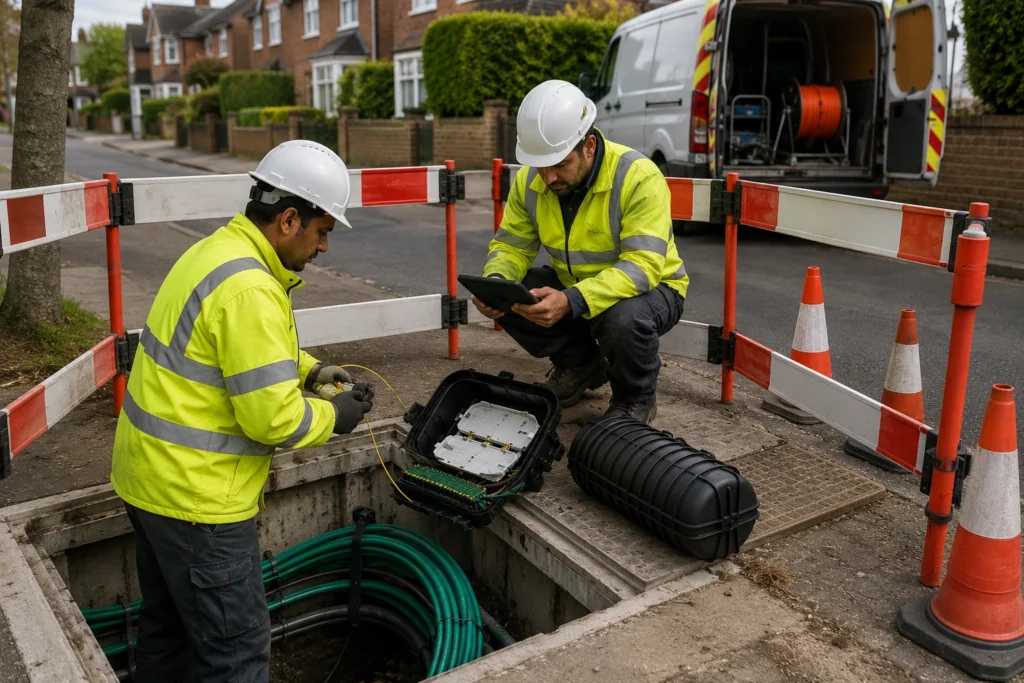
How Civil Engineering Affects Costs
When people ask why fibre projects vary in price, the answer often comes down to civil engineering.
Before fibre cables can be installed, engineers may need to create the physical path that will carry them.
This often involves:
- Trenching
- Duct installation
- Chamber construction
- Surface reinstatement
- Utility diversions
There is no doubt that excavation and groundwork are some of the biggest cost drivers in telecom infrastructure projects.
Typical Cost Factors
Activity | Cost Impact | Timeline Impact |
Site Survey | Low | Low |
Duct Installation | Medium | Medium |
Trenching | High | Medium |
Utility Diversions | High | High |
Road Reinstatement | Medium | Medium |
Fibre Testing | Low | Low |
Ground conditions also matter.
A soft grass verge is generally easier and quicker to work with than a busy urban road filled with existing utility services.
This is why no two projects have exactly the same budget.
Permits and Local Authority Requirements
A common mistake is the need for approvals.
Many fibre projects require:
- Street works permits
- Plans for traffic management
- Local Authority Approvals
- Util coordination
If work needs to take place near roads, footpaths, or public infrastructure, permission may be required before excavation begins.
Even a well-planned project can face delays if approvals are not secured early enough.
Experienced project managers typically start permit applications at the planning phase to cut down on the time it takes to wait later in the process. Controlling permits and coordinating the involvement of stakeholders is a crucial aspect of the delivery of telecom infrastructure.
The Role of Network Cabling Installation
Once the groundwork is complete, attention turns to Network cabling installation.
This stage includes:
- Fibre blowing
- Cable pulling
- Fibre splicing
- Internal building cabling
- Network testing
For multi-dwelling and residential properties Internal fibre installation could require the routing of cables across multiple floorings and access points prior to the final testing being conducted.
A straightforward property may only require a short cable route.
A larger development could involve hundreds of metres of fibre and multiple termination points.
The complexity of the network directly affects installation time.
Fibre Optic Network Installation and Underground Works
Many modern broadband projects rely on Underground fibre optic installation because it offers better protection and long-term reliability.
However, underground installations involve additional work such as:
- Excavation
- Duct placement
- Utility checks
- Reinstatement
A complete Fibre optic network installation typically involves telecommunications and civil engineering know-how to ensure that the network’s reliability for many years to come.
The goal is not simply to install fibre quickly.
The goal is to install it correctly so that future maintenance requirements remain low.
Common Reasons for Delays
Even the best-planned project can encounter unexpected issues.
Some of the most common causes include:
Unknown Underground Utilities
Older records may not show every cable or pipe beneath the surface.
Poor Weather
Heavy rain can affect excavation and reinstatement work.
Permit Delays
Approvals are sometimes longer than anticipated.
Access Restrictions
Access to sites is not always available, which could slow down installation teams.
Material Availability
Certain components might require additional lead times.
This is the reason experienced contractors integrate contingency times into their project plans.
A Real-Life Example
Imagine a new housing development requiring fibre broadband access.
Initial surveys show the nearest fibre route is several hundred metres away.
The project team identifies three challenges:
- A road crossing is required.
- Services that exist as utility providers require security.
- Local authority permits need to be protected.
It is easier to complete the installation without major disruption by conducting detailed surveys early.
The result is a completed fibre route delivered within the planned schedule and budget.
This type of proactive planning is exactly what helps reduce project risks.
Bringing Your Fibre Project Together
A successful fibre optic installation is about much more than cables.
Site surveys, civil engineering, permits, utility coordination, and Network cabling installation all play a major role in determining project costs and completion times.
When these elements are planned properly from the beginning, projects tend to run more smoothly, stay within budget, and reach completion faster.
With more than 20 years of experience supporting telecom infrastructure projects across the UK, CA Telecom UK helps clients manage everything from planning and civil engineering through to installation and final handover. Their end-to-end approach helps reduce delays while maintaining high standards of safety and quality.
Ready to Plan Your Fibre Project?
Whether you’re developing new housing, upgrading broadband infrastructure, or planning a commercial telecom project, working with an experienced infrastructure partner can make all the difference. Contact CA Telecom UK to discuss your requirements and receive expert guidance from planning through to project completion.
Frequently Asked Questions
How long does a fibre optic installation take?
It can take a few days for a simple residential installation, while longer projects that require excavation and permits may take up to a few weeks.
What's the largest cost factor in a fibre install project?
Construction tasks like trenching, installing ducts, and rehabilitating are typically the most expensive.
Why does Underground fibre optic installation cost more?
It requires excavation, duct placement, utility surveys, and surface restoration, which increase labour and material costs.
Can permits delay a fibre project?
Yes. Street approvals for works, traffic management requirements and local authority permits may extend the timeline of projects.
How can I reduce installation costs?
The early planning of your route, the thorough surveys, efficient route designs and working with skilled experts in telecom infrastructure can reduce expenses and minimise delays.