

Objective
This guide explains how a fibre optic network project is planned, delivered, and costed in the UK. It helps you make informed decisions before work begins.
Key Takeaways
- Understand the complete fibre deployment procedure.
- Find out what influences budgets and timelines for projects.
- Find common causes for delays.
- Know UK conformity and permit regulations.
- Find out how effective planning can reduce risk and enhance the results of your project.
Introduction
A successful fibre project starts long before the first cable enters the ground.
The UK needs fast digital infrastructure more and more. Businesses, councils, developers, and telecom operators are investing in full-fibre networks. Recent Ofcom data shows gigabit-capable broadband now reaches 89% of UK premises. This highlights the scale of fibre rollout across the country.
Whether you are planning a new housing development, expanding a telecom network, or upgrading commercial premises, understanding the planning, installation process, and cost factors behind a fibre optic network installation project can help you avoid delays, control budgets, and achieve better long-term results.
Why Fibre Planning Matters
Here’s the thing. Many project delays are not caused by installation work. They often begin during the planning phase.
A modern Fibre optic network installation involves civil engineering processes, utility coordination approvals from local authorities, traffic management, fibre deployment testing and commissioning. If you miss any of the steps may cause significant delays later on.
For telecom operators and developers, proper planning helps:
- Reduce project risks
- Improve budget accuracy
- Prevent utility strikes
- Speed up permit approvals
- Improve long-term network performance
What this really means is that investing time in planning usually saves both time and money during construction.
Here’s the thing. Many project delays are not caused by installation work. They often begin during the planning phase.
A modern Fibre optic network installation involves civil engineering processes, utility coordination approvals from local authorities, traffic management, fibre deployment testing and commissioning. If you miss any of the steps may cause significant delays later on.
For telecom operators and developers, proper planning helps:
- Reduce project risks
- Improve budget accuracy
- Prevent utility strikes
- Speed up permit approvals
- Improve long-term network performance
What this really means is that investing time in planning usually saves both time and money during construction.
Pre-Installation Planning Requirements
Before any Fibre optic installation work begins, several important assessments must be completed.
Site Surveys and Route Design
Survey teams assess:
- Existing utilities
- Ground conditions
- Access restrictions
- Traffic management requirements
- Proposed cable routes
These surveys help engineers determine the safest and most efficient route for fibre deployment.
The Fibre Optic Installation Process
Once planning is complete, the physical deployment phase begins.
Civil Engineering Works
The first stage usually involves creating pathways for fibre cables.
This may include:
- Trenching
- Duct installation
- Chamber construction
- Reinstatement works
The method chosen depends on site conditions and project requirements.
Fibre optic cable installation
After ducts are installed, fibre cables are deployed using specialist equipment.
Common methods include:
- Cable pulling
- Fiber blowing
- Direct installation into prepared ducts
The choice of method is contingent on the length of the route, the design of the network, and the conditions of the site.
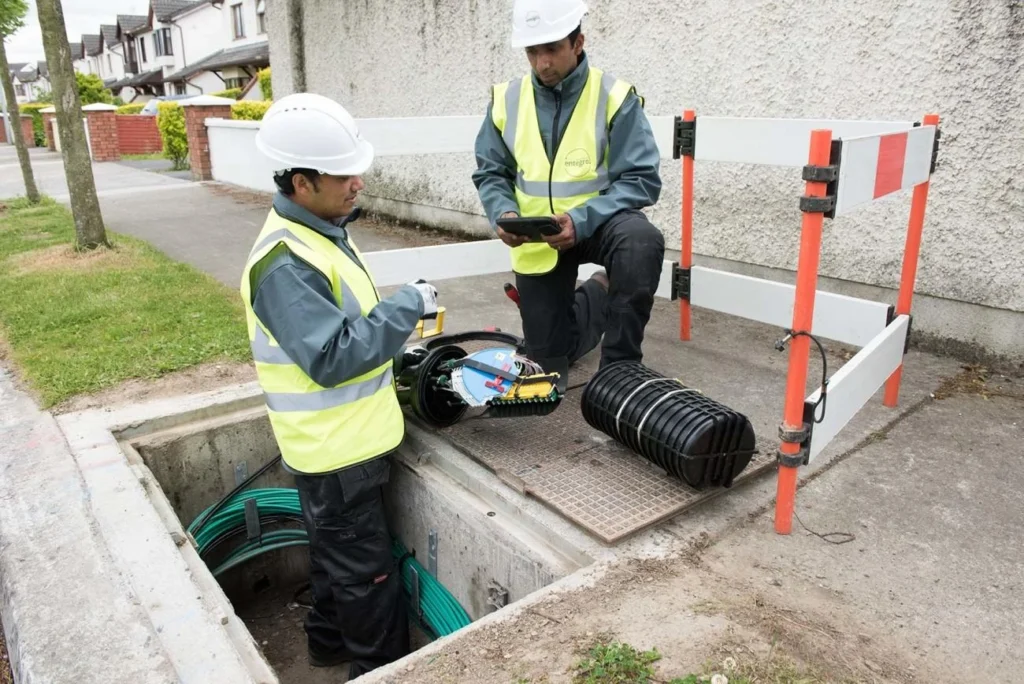
Splicing and Testing
Once cables are installed, engineers connect fibre sections through splicing.
Testing then verifies:
- Signal strength
- Network performance
- Fibre continuity
- Service readiness
Only after successful testing can the network move into service.
Key Cost Considerations for UK Projects
One of the most common questions we hear is:
“How much does a fibre installation project cost?”
The answer depends on several factors.
Ground Conditions
Hard surfaces, infrastructure that is already in place and access issues usually increase the construction costs.
Route Length
Longer routes require:
- More cabling
- Additional labour
- More chambers and ducts
- Increased project management
Traffic Management
Urban projects often require:
- Temporary traffic controls
- Road closures
- Pedestrian safety measures
These requirements can add substantial costs to a project budget.
Labour and Project Management
Skilled fibre engineers, civil engineering teams, and project managers play a major role in successful deployment.
Experienced teams may appear more expensive initially, but often reduce delays and rework costs later.
Cost Factor | Budget Impact |
Civil Engineering | High |
Fibre Materials | Medium |
Labour | High |
Traffic Management | Medium |
Permits and Compliance | Medium |
Project Complexity | High |
Compliance and Regulatory Requirements
UK telecom infrastructure projects operate within strict regulations.
Compliance is not optional.
It is an essential part of delivering safe and legally compliant projects.
Streetworks Requirements
Highway projects that are public generally need:
- Permit approvals
- Plan for managing traffic
- Security measures for the public
Health and Safety
Site safety procedures protect:
- Workers
- Road users
- Local communities
Risk assessments should be completed before work begins.
Environmental Responsibilities
Many projects now include environmental considerations such as:
- Waste management
- Sustainable construction methods
- Reduced disruption to surrounding areas
CA Telecom UK has built its reputation by supporting telecom infrastructure projects. It provides planning, civil engineering, utility management, and fibre deployment. It also maintains compliance throughout the project lifecycle.
Common Challenges and Practical Solutions
Even well-planned projects can face unexpected issues.
Unexpected Underground Services
Surveys for utility and precise mapping greatly reduce the chance of causing damage to existing infrastructure.
Delayed Approvals
An early engagement with local authorities can help avoid delays in approvals.
Budget Changes
With contingency budgets, projects can adapt to the changing conditions on the site without significant disruption.
Resource Availability
It is easier to maintain timeframes when equipment and labour are scheduled early.
Real-World Example
Think about a new housing development that requires fibre-optics prior to the residents move into.
The process begins with utility mapping and surveys. Engineers will then create the network route and seek permits. Engineers from Civil Engineering construct chambers and ducts prior to installing network cabling and fibre deployment.
Finally, engineers perform testing and commissioning before the network goes live.
If developers, utility providers, contractors, and local authorities don’t coordinate properly, they could delay the entire schedule.
This example highlights why experienced telecom infrastructure partners are often involved from the earliest planning stages.
Building Networks That Stand the Test of Time
The UK’s fibre rollout continues to accelerate. Government programmes such as Project Gigabit aim to extend gigabit-capable broadband access to almost all premises across the country in the coming years.
A successful Fibre optic network installation is about much more than laying cable. Planning, surveys, compliance, civil engineering, testing, and project management all help achieve reliable long-term network performance.
Whether you are a telecom operator, property developer, contractor, council, or business, a structured approach from the start helps. It can reduce costs, minimise delays, and improve project outcomes.
If you are preparing for a fibre deployment project, CA Telecom UK can support every stage of the process, from planning and civil engineering through to installation and commissioning.
Frequently Asked Questions
How long does a Fibre optic network installation project take?
Project duration is based on the length of the route permit, site conditions and the project’s level of extent. Small projects can take a couple of weeks, whereas more extensive infrastructure projects may take several months.
Learn more about How long does fibre optic installation take.
What affects fibre installation costs the most?
Civil engineering works, route length, labour requirements, traffic management, and permit requirements are usually the biggest cost drivers.
Why are site surveys important before fibre installation?
Site surveys identify existing utilities, access restrictions, and potential risks before construction begins, helping avoid delays and unexpected costs.
Do UK fibre projects require local authority approval?
Yes. Many projects require streetworks permits, highway approvals, and compliance with local authority regulations before work can start.
Why is professional Network cabling installation important?
Professional installation improves network performance, reliability, compliance, and long-term scalability while reducing maintenance issues.